
Emily Thompson had always felt like a ghost drifting through her own house. Her mother clearly favored her older sistersPoppy and Mabelshowering them with affection and warmth. The injustice gnawed at Emily, but she swallowed her bitterness, forever trying to please her mother in the hope of earning a sliver of love.
Dont even think of staying here! The flat will go to your sisters. Youve been a stray since you were a child. Live wherever you like! With those cruel words, her mother threw Emily out the moment she turned eighteen.
Emily tried to argue, to point out the unfairness. Poppy was only three years older, Mabel five. Both had completed university on their mothers dime; no one had rushed them into adulthood. Emily, however, had always been the odd one out. No matter how hard she tried to be good, the familys love felt thinif it could be called love at all. Only her grandfather, George, ever treated her kindly. He had taken in his pregnant daughter after her husband vanished without a trace.
Maybe Mum is worried about my sisters? They say I look just like them, Emily thought, searching for a reason behind her mothers coldness. She had asked for an honest conversation many times, but each attempt dissolved into a shouting match or a tantrum.
George was her solid rock. Her happiest memories were of the countryside cottage where they spent summer holidays. Emily learned to tend the garden, milk the cows, bake piesanything to postpone the return to a home where contempt and rebuke awaited her each day.
Granddad, why does nobody love me? Whats wrong with me? she would ask, fighting back tears.
I love you very much, he would answer softly, never mentioning her mother or sisters.
Little Emily clung to his words, believing she was loved in a special way. But when she turned ten, Granddad George died, and the familys cruelty deepened. Her sisters mocked her, and her mother always took their side.
From that day on, Emily received nothing newonly handmedown dresses from Poppy and Mabel. They taunted her:
Oh, look at that fashionable top! Go sweep the floor, dear Emilywhatever needs doing!
If Mum bought sweets, the sisters devoured them, handing Emily only the empty wrappers:
Here, love, collect the bits!
Mum heard it all but never scolded them. Thus Emily grew up as a stray cub, forever begging for love from people who saw her as nothing more than a punchline. The harder she tried to be good, the harsher their disdain grew.
So, when her mother finally kicked her out on her eighteenth birthday, Emily found work as a hospital orderly. Endurance and hard labour became her new rhythm, and at least now she earned a wagethough it was modest. In the wards, no one sneered at her. If kindness met you where cruelty once lived, that was progress, she told herself.
Her employer saw potential and offered her a scholarship to train as a surgeon. In the small market town of Alford, specialists were scarce, and Emily had already shown a talent for caring while assisting nurses.
Life was a grind. By twentyseven, she had no close relatives. Work became her entire worldliterally. She lived for the patients whose lives she steadied. Yet loneliness clung to her: she lived alone in a staff dormitory, just as she had once slept on the cold floor of her family home.
Visiting her mother and sisters was a constant ache. Emily tried to go as rarely as possible. When the house filled with smoke and gossip, she would slip onto the front porch and weep.
One bleak afternoon, a fellow orderly named Paul stopped beside her.
Why are you crying, love?
Beautiful dont mock me, Emily muttered, her voice barely audible.
Shed always seen herself as plain, a grey mouse, never noticing that, approaching thirty, she was now a petite, striking blonde with clear blue eyes and a neat, straight nose. The awkwardness of youth had melted away; her shoulders squared, her hair pulled back into a tight bun that seemed eager to break free.
Youre actually beautiful! Own it, dont hide your head. Besides, youre a promising surgeonyour future is bright, Paul urged.
Paul had worked beside her for nearly two years, offering chocolate now and then, but this was their first real conversation. Emily broke down, spilling every secret.
Maybe you should call Sir Edward Whitcroft? Hes the one you saved recently. He treats you wellpeople say he has many connections, Paul suggested.
Thanks, Paul. Ill try, Emily replied.
And if that doesnt work, we could marry. I have a flat, I wouldnt mistreat you, he added halfjokingly.
Emily flushed; she realized Paul was serious. He saw not a pitiful orphan, but a woman who deserved love.
Alright. Ill keep that option in mind, she smiled, feeling for the first time in years that she was more than a workhorseshe was a young woman with a future.
That evening she dialed Sir Edwards number.
This is Emily, the surgeon. You gave me your number and said I could call if anything came up she began, hesitating.
Emily! Splendid to hear from you! How are you? Lets meet, have a cup of tea, talk properly. We old folk love a good chat, Sir Edward replied warmly.
The next day was Emilys day off, so she went straight to his manor in the nearby village of Littlewick. She explained her dire situation and asked if he knew anyone needing a livein caregiver.
You understand, Sir Edward, Im used to hard work, but Im at my limit now
Dont worry, my dear! I can secure you a surgical post at a private clinic, and you can stay with me. Without you, I wouldnt be here now, he said.
Of course, Sir Edward. Will your family mind? she asked.
My relatives only appear when Im gonethey care only for the house, he sighed.
So they moved in together. Two years later, a tender romance bloomed between Emily and Paul, often blossoming over tea. Sir Edward, however, never liked Paul and made a point of warning Emily:
Sorry, love, but Paul is a good ladjust a bit weakhearted. You cant rely on him. Dont get too attached.
Sir Edward Its too late. Weve already decided to marry. He even proposed to me as a joke two years ago. And now Im pregnant, Emily announced, glowing with happiness. Youll still be important to me; Ill visit every day. Youre like family.
Emily, Im not feeling well. Tomorrow well go to the solicitor and register a house in your name. Youve always loved the countryside. It could be your cottage or you can sell it if you wish.
He hesitated, a frown creasing his brow. Emily tried to object: the house should belong to his children, not to her, especially since theyd seen him only once in those two years. Yet Sir Edward was adamant.
When the deed arrived, Emily discovered it was for the very village where Granddad George had lived. His old cottage had long since been demolished, the plot sold, strangers now occupying the land. Still, having a little corner of that place stirred warm memories.
I dont deserve this, but thank you, Sir Edward, she said, sincere.
Only one condition: dont tell Paul the house is in your name. And dont ask why. Can you do that for me? he asked, serious.
Emily nodded, promising to keep his secret. How she would explain the house to Paul remained a mystery, but she could say shed reconciled with her mother.
Later, Emily learned Sir Edward, besides suffering the effects of a stroke, also battled cancer. He refused surgery. In the end, Emily arranged his funeral and moved in with her future husband.
Troubles began in the seventh month of her pregnancyby then they had lived together six months.
Maybe you should work a bit before the baby arrives, Paul suggested.
Emily had already left the clinic Sir Edward had secured for her, hoping to live on savings and Pauls support. His words wounded her.
Well maybe she replied uncertainly. It was awkward; she bought the groceries, and Paul proved stingy. Yet the child grew inside her, and she didnt want to abandon the wedding.
A week before the planned ceremony, while Paul was out, a stranger slipped a key into their flat door.
Hello, Im Lena. Paul and I love each other, and hes simply too scared to tell you. So Ill say it: youre no longer needed, the tall, slim blonde announced confidently.
What?! Our wedding is in a few days! Weve paid for everything! Emily gasped, bewildered. Shed footed most of the modest café celebration costs.
I know. No problem. Paul will marry me. I have contacts at the registry; well sort it quickly, Lena declared as if the decision were already made.
When Paul finally appeared, he muttered, Emily, Im sorry Yes, its true. Ill help with the baby but I cant marry you.
Well do a paternity test, Lena added, placing a hand on Pauls shoulder.
A paternity test? Youre my first and only! Emily shouted, lunging at him.
Shell scratch you up, love! Shes almost thirty but behaves like a child! Lena sneered.
Paul stood mute, offering no defence, his gaze fixed on the floor. It became clear: everything pivoted on Lena; he was merely a passive observer.
Emily began packing. There was no point fighting a man who abandoned her so easily. Lena explained she and Paul had dated long agoshed been married then, now free. Emily was just a temporary standin until the dream woman returned.
She could have demanded explanations from Paul, but what was the point? Hed let Lena walk in and take over.
So the house finally comes in handy, Emily thought.
The cottage was modest, lacking running water, but the old castiron stove was perfecther grandfather had taught her everything needed for country life. It was livable. How to give birth alone? There was still time; she would figure it out.
Firewood was stacked, the shed sturdy, and a fresh blanket of snow lay at the doorway, ready to be cleared. The woodpiles were fulla rare blessing in such a cold winter.
Sir Edward had introduced her in advance to the neighbours as the new mistress and wife of his sonno unnecessary questions.
Emily, of course, phoned her mother and sisters. As expected, they offered nothing but cruel advice: put the baby up for adoption and next time, dont get involved with anyone before the wedding. They also gossiped about how Paul hadnt returned half the wedding money shed already paid.
But no one knew about the cottage. Now Emily could hide, gather herself, and survive.
It was bitterly cold; she kept her down jacket on. While raking coals in the stove, the poker struck something solid.
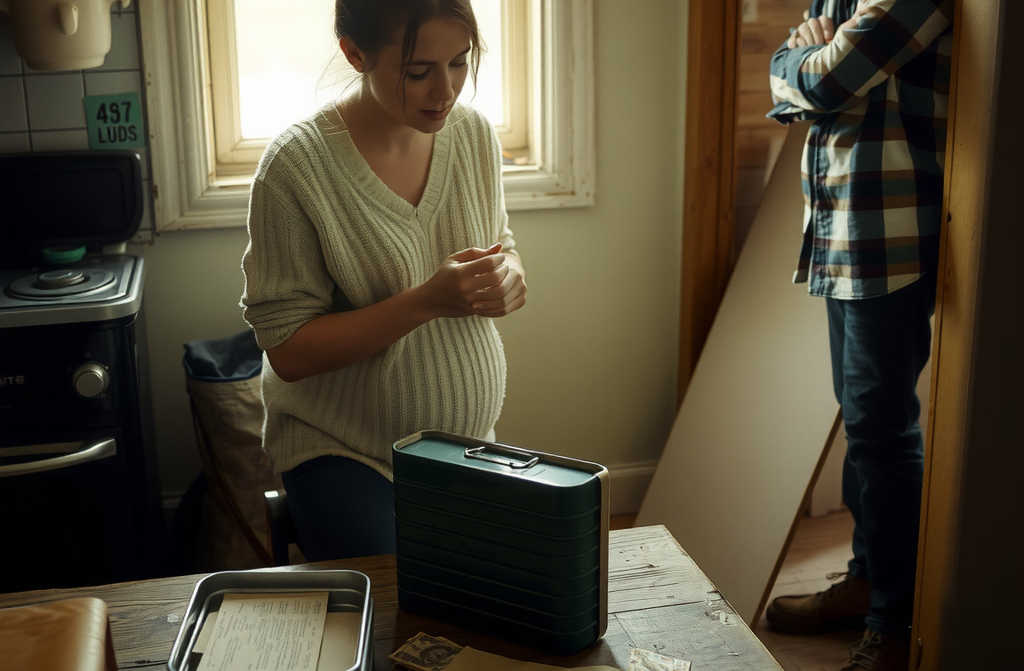
She slipped off her gloves and pulled out a wooden box that had blocked the firewood. The lid bore bold lettering: Emily, this is for you. The handwriting was unmistakableSir Edwards.
Inside lay photographs, a letter, and a small tin. Her hands trembled as she unfolded the envelope.
Dear Emily, you should know I was your grandfathers brother, the man he asked to look after you, the letter read. It explained a longago rift between George and Sir Edward; before his death, the elder brother found Edward and asked him to seek Emily after she turned eighteen. He also left her an inheritance his own daughter would never surrender.
Edward had struggled to locate herher mother and sisters hid her address. Fate brought them together at the hospital when he was a patient and she his doctor. He wanted to reveal everything sooner but never had the chance, so he arranged for the cottage George had bought from him while alive, knowing Georges daughter would never leave anything to the granddaughter.
Another shock emerged: Emilys mother was not her biological mother. Emily was the child of her late aunt, the very sister shed envied and resented. The photograph showed the young mother and father, smiling, cradling a little girl. Emily survived because she was with Granddad George on the day of the accident.
Fivethousandpound notes, left by George, lay in the box. Touching them warmed her heart. Tears streamed down her cheeks. Now she and her baby were safe.
When she lit the stove, the flames seemed to consume all her fears, betrayals, and resentments. She would start anewfor the child and for herself.
She would eventually forgive those who had hurt her, but she was done with them. This cottage would be her sanctuary.
Sir Edward had always said a good home belongs to someone who values it. Hed built it in his youth with his own hands, using the finest materials.
Not just a house, but a legacy! It will stand for centuries, he used to say. The village was a short bus ride awaytwo stops from Alford.
The pay was modest, and help with the baby uncertain, but she now had a roof, savings, a profession, youth, beauty, and a son on the way.
For the first time, Emily felt truly happy.