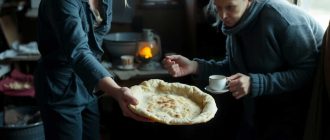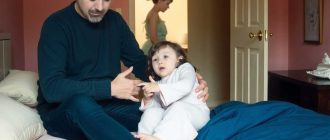
It was not the leash that cut the boy the deepest, but the words spoken before the blow. If your mother had not died, I would never have had to bear you, the man had snarled. The leather cracked in the air, the skin split soundlessly, and the child did not shed a single tear. He only pressed his thin lips together, as if he had learned that pain was to be endured in silence.
Isaac was fivejust five summers oldwhen he already knew that some mothers never loved, and that some houses taught you to hold your breath. That afternoon, in the old barn where the ancient mare thumped the ground with her iron shoe, a darkeyed hound lingered by the gate, its gaze weary from wars it had seen and would soon be called to again.
The wind that swept down from the Yorkshire Pennines hissed dryly that morning over the yard. The earth was hard, cracked like the boys lips as he dragged a halfempty bucket of water. Though only five, Isaacs steps were those of someone far older. He had learned to walk without a sound, to breathe only when no one was watching.
When he reached the trough, the bucket was nearly empty. A tired horse, a dapplegray mare named Mist, stared back in mute judgment, her coat speckled, her eyes misted. If you wont speak, I wont, Isaac whispered, laying an open palm on her flank. A sudden shout cut the air like a bolt of lightning. Again, you little beast, muttered the handler.
Sarah Whitfield appeared at the barn door, a riding crop in hand, her linen dress freshly pressed, a single white rose tucked behind her ear. From a distance she seemed a proper lady of the village; up close she reeked of vinegar and restrained fury. Isaac dropped the bucket, the earth drinking the water like a thirsty mouth. I told you the horses must be fed before dawn, she snapped. Did your mother ever teach you that before she died, you useless thing? The boy lowered his head. The first lash cut across his back like a slash of ice; the second fell even lower. Mist snorted, her hooves clattering. Look at me when I speak. Isaac only closed his eyes, a nameless child of no ones claim. You belong in the stable with the donkeys, Sarah hissed.
From a secondstorey window, Eleanor, the farmers daughter, watched. She was seven, a pink ribbon in her hair, a brandnew rag doll clutched tight. Her mother adored her; the farmhands wife, Megan, treated her as if she were a stain that no soap could wash away. That night, as the village gathered for prayers and the soft toll of the church bells, Sarah lay awake among the straw, eyes hard, tears long forgotten.
Mist moved to the edge of her pen, nudging the rotting wood that divided them. Do you understand? she asked without raising her voice. You know what it feels like when no one wants to see you. The horse blinked slowly, as if answering. A week later, a convoy of government vans, brightvested officers, and a graymuzzled old dog entered the dusty lane of the farm.
The dog, a seasoned border collie named Brock, had eyes that had witnessed more than any man could bear. Beside him rode Baillie Hart, a tall, darkhaired woman from the South, boots of worn leather, a folder thick with paperwork. Routine inspection, she said with a courteous smile.
An anonymous tip had reached them. Sarah feigned surprise, spread her arms as if offering the whole homestead. We have nothing to hide, Miss, she said, halflaughing. Brock paid no mind to the horses or the goats. He padded straight to the rear pen where Fisher, the stablehand, was sweeping muck. The boy stopped; the dog stopped. No bark, no tremoronly a long, shared pause in which two broken souls recognized each other. Brock sat opposite Isaac, neither smelling nor touching, merely standing his ground as if to say, I see you.
Sarah watched from a distance, her eyes narrowing like a serpent basking in the sun. Later, she told Baillie, halflaughing, He has a talent for tragedy. I only took him in out of pity. He isnt my son; hes a burden from my previous marriage. Baillie said nothing, but Brock placed himself before Isaac, his body a silent wall.
Can I help you, dog? Sarah asked, but Brock did not move. He only met her gaze, and for a heartbeat she averted her eyes, unable to tame the rawness in his stare. That night the farm seemed colder; Sarah drank more wine than usual. Young Eleanor, now called Grace, shut herself in with her doll, drawing houses where no one ever screamed.
Dreams of a warm embrace visited Isaac for the first time in years, though he could not name the person. He only remembered the scent of damp earth and a warm nose against his cheek. Mist thundered the ground with her hoovesonce, twice, three times. The boy opened his eyes and, through the shadows, thought he saw Brock lying outside the pen, watching, waiting, as if he knew that night could not last forever.
Morning rose with a low fog that tangled the bare branches, as if winter itself refused to let go. A white van bearing the faded crest of the Animal Protection Service rolled to a halt at the farms gate. Only the sparrows dared to sing. Baillie stepped out first, boots caked in dry mud, a bluewool scarf knitted by her grandmother in Yorkshire. Shed worn it for more than twenty years, a sort of shield.
A massive dog with a coat of cinnamon and ash followed, ears drooping, gait heavy but steady. Is this the place? Baillie asked the local guide, a man named Thomas Navarre, whose family had tended horses for generations. The dog, Brock, sniffed the air, padded slowly to the old wooden gate, paused, and stared inward.
On the other side of the yard, a boy no older than five carried a bucket of oats that seemed twice his weight. He dragged his feet, never crying, each step a silent apology for his very existence. Sarah emerged from the house just in time to see the van. Her dress was immaculate, makeup flawless. Animal assistance? she asked, her voice flat. No. Just inspection. All under control, she added, trying to sound reassuring. The horses are healthy, the premises clean. She raised her voice, ignoring the boy. Isaac, stop that. The boys neck bore an old scar like dried leather. Brock moved straight to him, did not sniff, did not seek permissionhe simply stood before Isaac as if the childs frail body were all that mattered.
Good lad, Sarah chuckled, her tone icy. That boy always makes a scene. He knows how to cry without shedding a tear. Baillie said nothing, only watched the dog and the child. Isaacs large dark eyes shone with something older than feara quiet, ancient waiting.
Brock tilted his head, nudged the boys hand with his nose. In that instant Isaac did something no one had ever seen. He reached out, brushed the dogs fur, and for a heartbeat felt a connection he could not name. Baillie crouched, her voice barely a whisper. Whats your name? the boy did not answer. Brock sat beside him, as if saying, You need not speak.
Sarah murmured, Hes a bit clumsy, thats all. We feed him, Baillie replied, He sleeps in the tool shed. The words floated like a drop of oil on clean water. Baillie inspected the stables, asked brief questions, found everything seemingly in ordertoo neat, perhaps.
When they returned to the yard, Isaac was gone. Brock sat by the back door, unmoving, as though he knew hidden secrets lay behind it. Is that dog still on duty? Sarah asked with disdain. He looks retired. Baillie smiled faintly. These dogs never truly retire. They wait for their final task. He moved to a rosebush, thorns jutting, a shy blossom peeking out. And the girl? asked Eleanor, now a schoolage child. Shes different. She has character, not like the others. Baillie said nothing, only murmured, Sometimes the one who does not scream remembers most.
Brock made no bark as he climbed into the van, pausing once at the stables cracked window, eyes still watching. In that stare there was no pleading, only an ancient patience, as if he finally understood that someone at last was listening.
The village of York, its cobbled streets, kept stories in the stones that no one dared recount. The doors of the cottages creaked, their hinges complaining of the nights whispers. Everyone knew something, yet spoke of everything but the truth.
Sarah passed the market square in a fitted dress, nails painted the colour of dried blood. She greeted with a crooked smile, as if recalling the exact price of every favour shed ever granted. How is the little one? asked the baker, voice soft as cotton. Stubborn as a mule, Sarah replied. Dont worry. I know how to tame the difficult beasts, she added, without shame.
From a bench beneath an old fig tree, a man named Mirren watched, his eyes heavy with invisible debts. He owed his brothers farm, and Sarah owed him silence. Brock, the old border collie, lay each day by the centre of the animal charity, never barking, only watching the farms gate as if waiting for someone to open the mouth of the past.
One dawn a neighbour, Matthew, a solitary farmer who talked to his chickens and tended his garden at three in the morning, knocked. I dont trust people, he said, but I trust the look of that dog. Baillie frowned. Matthew left his hat on the table, his rough hands trembling slightly. I hear the same sequence every Thursday night: the crack of leather, a contained scream, a low growl. Isaac flinched at the memory.
Brock, lying at his feet, let out a low whine. Why didnt you say that before? Baillie asked quietly. Because no one listened to the mad, Brock seemed to answer. He produced from his collar a small, battered recorder. When he turned it on, a faint hiss filled the room. Baillie nodded, whispering, Thank you for coming.
Later, Sarah stormed the farm house, coat of black wool, chin lifted as though claiming an inheritance. Im here for the boy, she declared. Brock rose, his legs stiff, but his stance unmoved. He planted himself between Isaac and her, a solid wall of fur. This animal needs a leash, like everything that does not know its place, Sarah sneered. Isaacs eyes held a dull shine, the kind of light that belongs to those who have stopped waiting for miracles.
The judges chambers in Durham smelled of old oak and winter. The ticking clock, the rustle of case files, occasional sighs that seemed to hold decades of history. Sarah entered, her coat immaculate, chin high, as though demanding an inheritance rather than facing truth. The presiding judge, Lady Orchard, turned the pages slowly, not from disinterest but from respect for what had not yet been spoken.
Proceed, she said. The prosecutor named Sarah Whitfield, accused of physical and psychological abuse of her stepson, Isaac Hart. Sarah smiled thinly. That boy was always a problem. He invented things, hid like an animal, then wept for attention. He never understood discipline. Brock, now standing tall, seemed to feel the sting of those words. Isaac bowed his head but did not cry. The judge asked for evidence. A sealed envelope was placed on the tableinside, only drawings: a wounded horse, a hunched child, a raised hand with a belt, always a dog beside the child. No medical reports, no photographs.
Nora, a witness from the village, swallowed hard. The judge asked Isaac, Do you have something to say? The boy looked at his mother, then at the dog, then at the floor, finally lifting his gaze as if wings were sprouting. I thought my mother said I was a burden, he whispered. She once struck me once, just one blow, and it felt like glass shattering inside me.
Sarahs lips tightened. It was an accident, a mild correction. All mothers do this sometimes. The judge replied, Mothers who love do not need to correct through fear. The room fell silent, like an old prayer. Matthew rose, his battered notebook in hand. I have no formal training, he said, but I have ears. For two years I heard the sound of leather striking flesh and a tiny whine like a wounded dog. And nothing was done. He cried out, I was a coward, but today I speak for the first time.
The prosecutor made no further questions. Brock stood, walked to the centre of the room, sat opposite Sarah, and stared at her with eyes that seemed to ask, Can you sleep at night? The boy then rose, his feet barely touching the floor, his voice low yet clear. She never saw me, he said. She only shouted at my shadow. But Brock saw me. And Ruth the mare saw me. I learned that if an animal can defend me, I can defend myself.
The judge closed the file, breathed deeply, and said, This court judges not only by law but by memory. A childs memory cannot be erased by excuses. She pronounced three years of conditional imprisonment, loss of custody, and mandatory supervised therapy. Sarah did not weep, but neither did she smilerelief, perhaps, rather than fear.
Isaac stepped down from the dock, walked to Brock, embraced him silently. Its over. I no longer have to hide. Brock rested his head on the boys chest, and for the first time since they entered that courtroom, peace settled over the room. Lady Orchard handed a warm scarf to a young officer, whispered to Brock, Good boy, very good. Outside, the afternoon unfurled like a slowblooming flower, the first rays of sun brushing the cobbles of York.
The fields around the farm lay drenched in dewtrue dew, not the old mares tired eyeswhen Isaac walked barefoot among the rows, his trousers rolled, hands in the pockets of a heavy woolen coat. Brock followed, leashless, silent, his steps as soft as breath. They paused at the stables fence, where the wind always blew a little stronger, as if trying to carry away the memories no one dared name.
Isaac looked up at the hill. Ruth grazed calmly, no longer a relic of the past but a living presence in a present that hurt less. You know, the boy whispered, here no one calls me useless, no one says Im a burden. Brock tilted his head, as if understanding each syllable. Here I may be quiet, but not the silence that once weighed like a soaked blanket on my shoulders. It was a different silencedawns hush, freshbaked bread, a hug that made no sound.
Eleanor, now a teenager, watched from the kitchen window, a mug of tea warming her hands. The house was simple, stone walls thick, photographs of ancestorsher father, her brotherhung in frames. Her mother, a devout woman, lit a candle each night for the departed. When she spoke, her words fell like seeds, taking root where least expected.
The boy has a tenderness that cannot be bought, Brock seemed to think, his tail wagging ever so slightly. He lay beneath the table, no longer chasing squirrels, no longer barking at visitorsjust a steady beacon, a quiet guard that said, You are safe here.
When the judges letter finally arrived, its seal dry but its words heavy, it confirmed Isaacs right to remain on the farm forever, free from fear. The solicitor read it twice, then walked to the stable and handed the paper to Isaac. You may stay as long as you wish, she said. Isaac did not answer at once; he stroked Ruth behind her ear, the place that always itched. I can keep sleeping in the shed with Brock, he whispered. He nodded as Brock gave a soft whine of approval, and Sarah, for once, smiled genuinely.
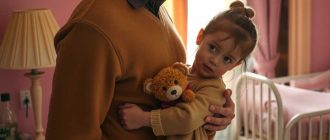
A week later, Eleanors younger sister, Lily, was moved to a specialist centre. No one forced her to speak; they simply showed her Isaacs drawings, and something inside her crackednot in anger, but in understanding. Mum doesnt love us, Lily had whispered before sleep, clutching a borrowed teddy bear. That night, while Brock rested under the sunwarmed stone, Isaac approached with a fresh sketcha boy walking through a meadow with a dog at his side, both heading toward a horizon blooming with flowers. He placed the drawing by Brocks paws. I have no mother like other children, he said, but I have you. Thats enough.
Sarah, leaning against the stable wall, rested her forehead on Brocks flank and, for a heartbeat, the world felt whole. From the kitchen, Eleanor watched, pressed a hand to her chest where sometimes the absence hurt, and whispered a quiet thanks to the unseen forces that had finally listened.
If you, dear reader, have reached this far, perhaps you have ever felt there was no room left for new tenderness, that children like Isaac were lost causes, that old dogs like Brock had no battles left to fight. Let me tell you this: love asks no permission, requires no paperwork, no shared surnames, no perfect stories. It only needs space, time, and a second look.
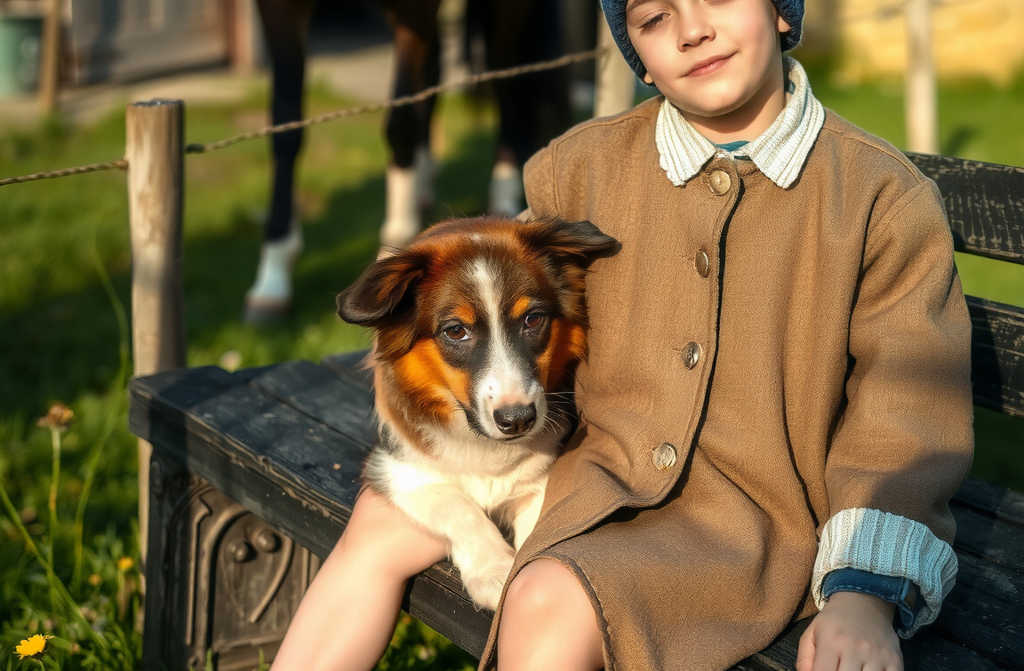
Now, in the quiet of the farms garden, a wooden bench sits beside the field. Isaac spends his evenings there, Brock sleeping at his feet,And as the twilight deepened, Isaac whispered to Brock, We have finally found a place where silence means peace, not pain.The first star pierced the darkening sky, a steady point of light that seemed to pulse in time with his heartbeat. Isaac felt the cool grass beneath his knees and the steady rise and fall of Brocks breathing against his calves. The old barn, once a place of echoes and bruises, now stood quiet, its doors slightly ajar as if inviting the night to settle in.
A soft rustle announced Ruths approach; she nudged the fence with her nose, eyes calm, and lowered her head to touch his hand. The contact was brief, but it carried the weight of every unspoken apology, every promise of gentler days. Isaac smileda shy, genuine curve that surprised even himand whispered, Were home now.
From the kitchen doorway, Eleanor stepped out, a steaming mug cradled in both hands. She set it down on the bench beside him and, without words, placed her palm over his. Youve taught us all how to listen, she said, her voice barely more than a sigh. The fields hear us now, and the walls remember the kindness youve shown them.
Brock lifted his head, ears twitching at a distant hoot. He trotted a short distance, circled the bench, and settled again, his tail thumping a soft rhythm against the earth. In that motion, Isaac sensed a promise: the dog who had once guarded a boys silence would now guard a communitys hope.
Later, as the night deepened, the wind carried a faint melodyan old folk tune that had once drifted over the Pennines. It wrapped around the farm like a lullaby, weaving through the reeds and the low roofs, coaxing the lingering shadows to retreat. Isaac closed his eyes, letting the tune fill the empty spaces where fear had lived.
In the weeks that followed, the farm transformed. The village council, moved by the testimony of Matthews notebook and the undeniable change in the land, allocated resources to restore the stables and fund a small schoolroom where children could draw, sing, and speak without fear. Sarah, after months of quiet reflection, returned to the house one evening, her steps hesitant but purposeful. She knelt beside the bench, placed a single white rose on the wood, and whispered, I am sorry for the cracks I caused. Brock lifted his head, eyes soft, and allowed her hand to rest on his shouldera silent forgiveness that needed no words.
Time, as it always does, edged forward. Isaac grew taller, his hands steadier, his sketches richer. He began teaching younger children how to tend the animals, how to read the language of a horses ear twitch or a dogs gentle nudge. Eleanor stood by his side, her pink ribbon now a faded memory, replaced by a badge of the communitys caretaker. Together they cultivated a garden where lavender and rosemary grew beside rows of potatoes, a place where every scent spoke of renewal.
One autumn evening, as the leaves turned amber and the air grew crisp, Isaac stood once more on the bench, Brock at his feet, Ruth grazing nearby. He lifted a small, weatherworn notebookits pages filled with the drawings that had once saved a little sisters heart. He turned it to the last page, where a simple line was written in his careful hand: Silence is not the absence of sound, but the presence of peace.
He closed the book, looked up at the stars, and felt the steady beat of his own heart echo the rhythm of the land. The farm, once a crucible of hurt, now sang a quiet hymn of resilience. And in that hush, Isaac knew the truth that had guided him through every dark hour: love does not need a voice; it needs only a steadfast heart and a companion willing to listen.
The night settled, the wind whispered its ancient tune once more, and beneath the canopy of constellations, a boy, a dog, and a mare restedtogether, finally, at peace.