
March14, 2024
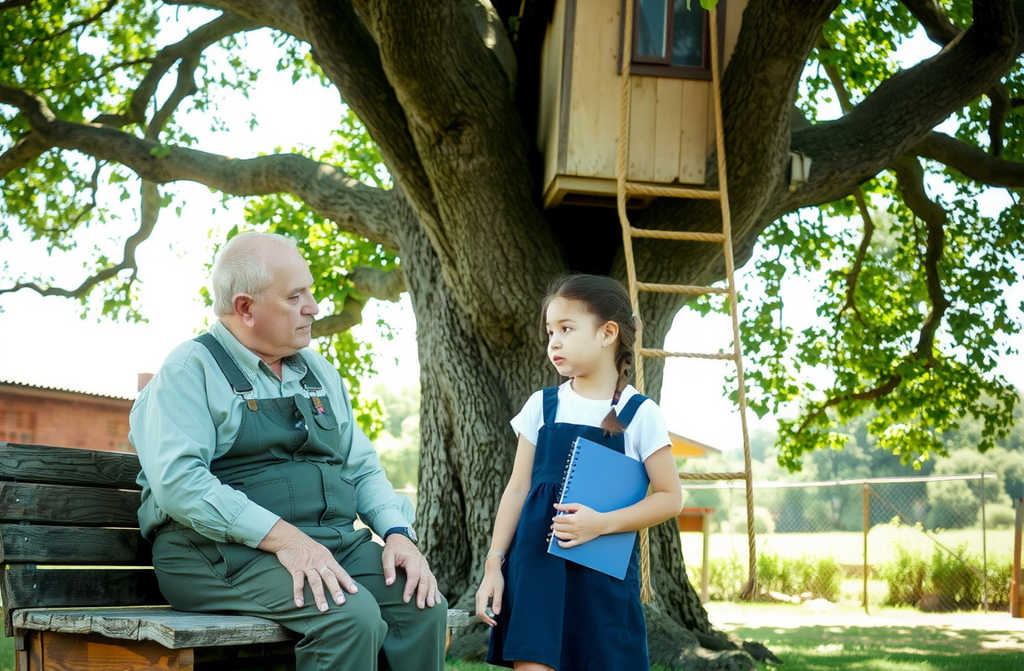
The ancient oak in the centre of the schoolyard at BramleyPrimary is bent, yet it still stands proud over the playground. No one can recall when it was first planted, but every teacher swears its older than the headmaster himself.
I, Thomas Harris, the groundskeeper, tend to it like an old wooden granddad. Each autumn I rake up its leaves with deliberation, and in spring I make sure no rusted nails from forgotten swings or stray planks cling to the branches.
This tree has watched more recesses than well ever see, I often remark.
At the start of term a new pupil arrived nineyearold Ethel Whitby, just moved from the city. She kept to herself, always tucked in a corner of the yard, sketching quietly in her notebook. I noticed her.
Dont you ever play with the others? I asked.
They dont know me, she answered without looking up. And Im not sure I want them to.
I didnt press further, but that very afternoon I set to work. I gathered old planks, rope, and a few borrowed tools. After the children went home, I climbed the oak and added something new each day a low rail, a tiny window, a modest bench.
Within a week a modest treehouse was perched among the lower limbs, snug and hidden from sight.
When Ethel came in the next morning, I called her over.
Ive got something to show you, I said.
She followed, wary but curious. The wooden door set into the branches left her speechless.
Its yours if you want it, I offered. You can draw, read, or simply think up here. Nobody climbs up without your sayso.
Ethel slipped inside, set her notebook on the bench and peered out through the round little window. From that height the world seemed smaller, safer.
Soon she began inviting classmates. First the girl who lent her a coloured pencil, then the boy who taught her how to fold paper airplanes. The treehouse grew into a tiny haven of friendship.
One afternoon a fierce storm battered the village; the oaks limbs shivered as though they might break away. I rushed to the yard, anxious that the house would survive.
Ethel appeared, drenched.
Is it alright? she shouted over the wind.
I think so, but stay down for now, I replied.
When the wind finally died, the structure was still there, though a piece of roof had been torn away. I sighed with relief, but before I could mend it the pupils organised a repair crew. Each brought something cardboard, old curtains, paint, rope and together we rebuilt the refuge.
On the wall they painted a line Ethel had written in steady hand:
There’s always room for one more.
Years passed, and the treehouse welcomed many generations. I grew older; Ethel grew up, left for the city and trained as an architect.
Ten years later she returned to visit her grandmother, walked past the school and saw the oak still standing, its house still intact, though a little weathered. I was sitting on the bench, as always.
I knew youd come back, I said, smiling.
Ive come to thank you, she replied. I think that was the first time I ever felt at home somewhere.
I looked at her with quiet pride.
It wasnt the house, Ethel, I said. It was you. You only needed a place to remember who you are.
That day she promised that, wherever she built, she would always create spaces where people could feel safe.
**Lesson:** a modest act a few planks, a rope, a listening ear can become the cornerstone of a lifetimes worth of belonging.