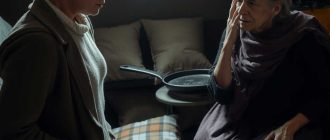
For a few moments, no one even stirs.
A boy, kneeling before her.
I can fix that, he says.
A handful of guests glance at each other, murmurs flickering between them.
The womans brow creases, both wary and perplexed.
I beg your pardon?
But he offers no rebuttal, only resting his hands gently upon her feet.
Please trust me.
Theres something about his tone
uncertain yet steady
that hushes every corner of the room.
Her breathing shifts.
The string quartet softens,
its music fading to the edge of hearing.
And then
something stirs.
A flicker, scarcely noticeable.
But unmistakably real.
Her fingers tighten on the velvet armrest.
Wait
Her voice, barely a whisper.
I felt that.
Utter silence falls,
an impossible quiet.
Not after so many years.
She looks down,
first at the boy, then at her motionless legs,
then back to his intent gaze.
How did you do that?
He looks up,
his reply a murmur
words that freeze her to the spot.
Light shimmers along frosted glass, silver candelabras, and the white marble of the hall as the quartet continues, oblivious to the breathless gathering.
But now every eye is on them.
Not the musicians.
Not the waltzing couples.
The boy.
He kneels at Catherine Vales wheelchair, his quiet assurance unnaturally out of place for a child.
Surrounding them: MPs, financiers, actorspeople used to shifting the world with a word or a cheque.
No one dares interrupt.
For the woman in the chair is Catherine Vale.
And in over a decade, not once has anyone seen her move her legs.
I can fix that.
At first, a few half-hearted smiles.
A childs game.
A misunderstanding.
A fantasy.
But the boys face never changes.
Catherines frown deepens, torn between annoyance and disbelief.
I beg your pardon? she repeats.
He raises his head, calm and unwavering.
No hint of jest.
No nerves.
Only certainty.
He places his hands gently on her feet.
Please, his voice a low request. Trust me.
Something shifts through the crowd like a draught in an old house.
The music floats somewhere out of reach, unfocused.
Every guest leans unconsciously forward.
Theres a gravity in the hush that seems to bend the air.
Catherine almost recoils.
Then
warmth.
Small.
Faint.
But real enough.
Her breath catches.
A sensation rises, crawling through nerves the consultants declared long dead.
Her grip on the wheelchair tightens convulsively.
Wait
The quartet falters, a note falling flat.
Now the crowd is facing them completely.
Her words, barely audible:
I felt that.
The hush snaps tight.
A doctor by the champagne tower stiffens.
Her husband moves closer, eyes wide.
What did you say?
Catherine breathes faster, her words catching.
I She swallows, voice ragged. I felt him touch my foot.
No one dares move.
It isnt just unlikely.
Its impossible.
There were twelve operations.
Three continents.
The best specialists found.
None prevailed.
The boy stays kneeling, steadfast and silent.
Then
her right foot flicks.
Just a fraction.
Small.
But visible.
A woman lets out a stifled cry near the spiral staircase.
A glass slips from someones hand, shattering.
Catherine stares down, real terror overtaken by something far worsehope.
How did you do this?
The boy lifts his face to hers.
And says quietly:
You werent meant to make it through the crash.
The world seems to crack open.
Catherine freezes.
Her husbands face turns ashen.
Because the truth, the real story of the accident, has never been told.
The papers reported an icy lorry spin on the M1.
But only a handful ever knew
The brake lines had been sliced.
Catherine was meant to die that night.
The boys gaze remains steady.
Still on hers.
My mum was the nurse who pulled you from the river.
Catherines breaths grow shallow, chest trembling.
It cant be.
She told me you kept asking for your baby, the boy says, voice breaking. Even after the doctors told you your daughter didnt survive.
Tears spring instantly to Catherines eyes.
She had given birth just hours before the collision.
A baby girl.
Taken before she could hold her.
The boys hands squeeze gently on her feet.
And softly, as the crowd holds its breath, he adds:
She survived.Catherines heart pounds in her throat.
Shes alive? she breathes into the crystalline hush.
The boy nods. Shivering, triumphant. There is awe in his tear-glazed eyeseyes that, abruptly, she recognizes. Hers.
My mother adopted her. Me. Im your son. I found you.
A gasp, sharp and bright, slices through the air.
Her hand rises, trembling, reaching for his cheek. He leans into it, young and fragile and impossibly familiar.
The music, almost forgotten, wellshushed strings swelling in the periphery. Some guests cover their mouths. Others stare, rapt.
In the depth of her body, sensation bloomsa wild nerve-fire, surging up from her feet, through every scar and ache and memory. Her legs burn, electric and awake.
With halting faith, she pushes against the footrest.
Her heel lifts.
One gasp becomes a chorus. Her husband stumbles to her side, tears streaming. Someone applauds. Another sobs aloud.
But Catherine only sees her sonalive, kneeling beside her, radiating hope she thought lost forever.
She pulls him into her arms, burying her face in his hair, laughter and weeping tumbling free.
Above them, the quartet resumes, playing not for ceremony but for wondermusic swelling like sunrise after a night far too long.
Catherine stands.
Applause eruptsa tidal wave of sound, a celebration of a miracle, of lives rewoven thread by trembling thread.
And as the hall spins with joy, Catherine holds her child close. Her feet steady.
Finally, she walks.