
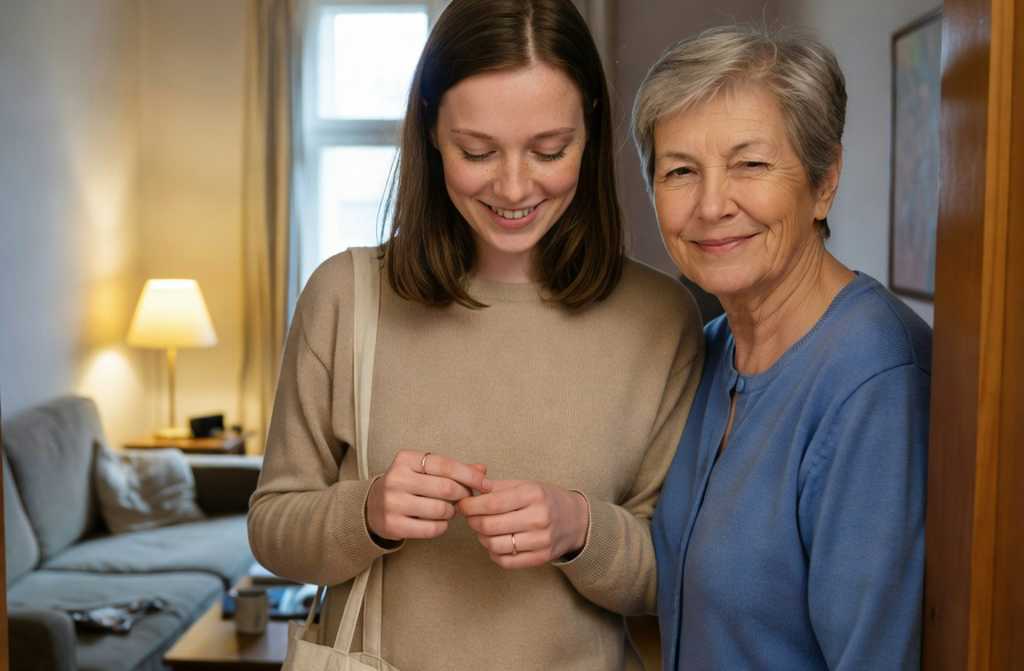
Mrs. Eleanor Bennett tilts her head slightly and studies her new tenant with a calm, attentive look. Her eyes show no pushy curiosity, just a clear readiness to listen.
“Problems in your personal life?” she asks.
“A bit,” Emma replies with a sad smile, running her fingers along the edge of her bag. She feels awkward, since a chat with the landlady hardly calls for such personal details, yet the words tumble out anyway. “I split up with my boyfriend just a week ago, and we had been seeing each other for almost a year!”
She sighs, and the sound carries not only sadness but a surge of bitterness that rises whenever she recalls the final days of their relationship. Her mother’s pale face flashes before her, along with that weak smile: “Emma, how are you? Everything all right?” Emma had nodded and forced out a “Of course,” even as everything inside tightened with pain. She cannot worry her mum, who already has enough health concerns.
“My friends just laugh and tell me to get over it, that I’ll find someone else, someone better,” Emma goes on, attempting a smile that comes out strained. “But I don’t want to just get over it! We shared so much… I thought it was serious.”
Mrs. Bennett nods and settles slowly on the edge of the sofa. The room feels cosy with its soft lamp light, neatly placed items, and the scent of fresh tea drifting from the kitchen. It encourages talk and eases any strain. Mrs. Bennett has grown accustomed to stories like this over the past couple of years, as many young women have stayed in her flat, each carrying her own drama, worries, and hopes. Some leave after a month, others stay for years, yet nearly all eventually open up about what burdens them.
“What led to the row?” she asks, keeping her voice as warm as she can. She does not demand details or press, simply offering space to speak if Emma wishes.
“His mum didn’t take to me,” Emma answers gloomily, dropping her gaze. Her fingers tug at the bag’s edge again, searching for something to grip. “You see, I was expected to spend every bit of free time fussing over her! She’s quite ill…” Bitterness slips into her tone. “I tried to help, truly! I went to the chemist’s, brought groceries, stayed with her when he had to go to work. But it never felt enough. She wanted me to live there full time, dropping my own plans, studies, and friends. When I said I couldn’t abandon everything, she told him I was cold and didn’t value family.”
“What was wrong with her?” Mrs. Bennett asks, though she already guesses the direction. “What serious condition did she have?”
“Nothing major, just slightly raised blood pressure,” Emma replies bitterly, twisting the hem of her jumper. “Yet she rang for an ambulance every day and moaned that she was dying. I tried to help, I really did… But if I stayed late at work for a couple of hours or met friends, the complaints began at once: ‘You don’t value family, you don’t respect the sick! Only your own matters count to you!'”
Emma falls quiet, eyes lowered. The boyfriend, who first tried to stay fair and hear her out, began defending his mother more often until he took her side almost entirely. She recalls him saying wearily, “Mum really feels poorly, you could show a bit more care.” Each time, resentment built inside her: why did her efforts go unnoticed while any small lapse was branded as indifference?
“I remember one evening I stayed late at work for an urgent project,” Emma continues, clenching her hands. “I arrived home late, and she was already lying there, looking ready to faint. She started straight in: ‘See, you care nothing about what happens to me!’ I hadn’t even changed my shoes before rushing over, asking what was wrong and how I could help… But that wasn’t what she wanted! She needed me to feel guilty!”
Mrs. Bennett nods in silence, not cutting in. She understands how difficult such family situations can be for young women.
“Bad luck, that,” Mrs. Bennett says at last, shaking her head. “But don’t dwell on it so much. It’s even fortunate you never married! Picture the life you’d have faced with a mother-in-law like that. It hurts now, naturally, but you’ll come to see it as a sign, sparing you from tying yourself to someone who cannot stand up for you.”
She offers a small smile, softening her words further.
“Life works that way, you know. Today everything seems to collapse, yet tomorrow fresh chances appear. You’ll meet someone who truly values you, who won’t force a choice between him and his family. For now, breathe deeply and allow yourself time to heal. Remember, your life isn’t only other people’s troubles. You have your own dreams and plans, and they count too.”
Emma manages a weak smile, blending bitterness with a touch of hope.
“Perhaps you are right,” she says quietly, glancing aside. “Still, it stings to tears! We began so well… He was attentive and caring, always asking about my day, giving small gifts without reason, supporting me through work worries. Then he seemed replaced. Once his mum fell ill, he forgot our shared plans and dreams… Everything reduced to me staying with her around the clock.”
She stops, swallowing hard. Memories of the early months, warm and light with laughter and tenderness, now sting sharply against the last weeks of arguments and every explanation dismissed as indifference.
“Here’s what I will say,” Mrs. Bennett replies with a knowing smile, tilting her head. A warm, encouraging spark lights her eyes. “Within a year, you will marry a good man. A real one. Who will value you, respect your limits, and never place you between him and anyone else.”
“Are you a fortune teller?” Emma asks with a faint smile. She feels surprised and glad that someone she barely knows offers such care and kind words. Deep down she suspects Mrs. Bennett simply wants to cheer her, yet the words ease her a little.
“Not at all!” the landlady laughs, waving a hand. “It’s just that all my tenants end up married and happy. One met her future husband at art classes six months after moving in. Another found a fellow in a nearby cafe, and now they have two children and their own small shop. The third… there have been plenty! Each began with some drama but later found her happiness.”
Emma cannot help laughing, though tears linger in her eyes. The sound comes out shaky yet real, and for the first time in weeks she feels lighter, as if a weight on her shoulders has loosened.
Mrs. Bennett rises from the sofa, smooths her dress, and signals for Emma to follow.
“Come along, I’ll show you the room. It’s quiet, with a window overlooking the courtyard, so street noise won’t disturb you. Morning sun comes in just right for waking in a good mood.”
Emma nods and stands, sensing the heaviness ease bit by bit. She takes her bag and trails after the landlady, noting how cosy the home looks, everything neat and tasteful with a hint of warmth and care. In that instant, for the first time in recent weeks, it seems something good may lie ahead.
The first days in the new flat pass in a flurry of activity. Emma keeps finding tasks to avoid sitting alone with her thoughts. She arranges items in the wardrobes, hangs clothes, and sets books and small belongings from her previous place onto the shelves.
Slowly she settles into the fresh routine. She wakes later than before, brews coffee, and opens her laptop. Working from home spares her the commute, a real advantage. During breaks she steps onto the balcony, draws in fresh air, and listens to courtyard sounds: children laughing, leaves rustling, bicycles passing.
She begins exploring the neighbourhood, strolling along quiet streets, peering into little shops, and noting spots to linger. The area feels cosy, with a park of shaded paths and benches nearby, plus cafes that draw her with warm light and the smell of fresh baking. In one she has already sat with her laptop, where it stays quiet, soft music plays, and staff let guests take their time.
One evening, returning from the shop with a bag of groceries, Emma spots a man by the entrance. He leans against the wall, typing intently on his phone. Tall and slim, with dark hair tousled by the wind.
As she draws closer he looks up, holds her gaze briefly, then smiles gently.
“Hello,” he says. “You must be the new neighbour? I’m Oliver, on the third floor.”
“Emma,” she says, smiling back without meaning to. “Yes, I moved in recently. I don’t know everyone yet.”
“Excellent,” he nods. “If you need anything, just ask. Neighbours here help one another. A bulb blows, internet drops, everyone turns to each other. So don’t hold back.”
“Thank you,” she answers. “All seems fine so far, but if something arises I’ll certainly ask.”
Oliver smiles again, nods, and returns to his phone while Emma heads inside, feeling a light pleasant flutter. Nothing remarkable, merely ordinary talk, yet it leaves her thinking things may not be so bad. That this new life might not feel so strange.
They exchange a few more brief words. Oliver asks if the fifth floor suits her (the lift works reliably, another plus), and Emma asks how long he has lived here. The chat stays light and easy, yet lingers pleasantly afterward.
Emma enters her flat, steps into the lift, and glances at the mirror out of habit. A soft, relaxed smile still rests on her face. She surprises herself; a few minutes with a stranger and her mood has lifted. Nothing dramatic, no sudden romance or nerves, simply a sense that the world has grown a touch warmer and friendlier.
The next day near midday, Emma leaves to drop some items at the laundry on the ground floor. Scarcely on the stairs, she sees Oliver carrying a bin bag toward the containers by the entrance. He notices her, stops, leans on the rail, and nods in a friendly way.
“Settled in all right?” he asks directly, with real interest. “Found your way around, or still unpacking boxes?”
“Fine,” Emma replies with a small smile. “Boxes are mostly done, but local conveniences still puzzle me. For instance, I haven’t located good coffee nearby. I can’t face mornings without it.”
“Oh, I know the spot!” Oliver brightens at once, standing straighter. “Two streets over there’s a small cafe that makes wonderful cappuccino. They even deliver to the door! Proper stuff with thick foam and an aroma that wakes you instantly. Shall we go? I’ll show you, if you have time now.”
Emma hesitates a moment but feels no wish to refuse. She needs the coffee, and talking with Oliver proves surprisingly easy, without searching for words or feeling awkward.
“Let’s go,” she agrees. “Only, if the coffee disappoints, I will be very let down.”
Oliver laughs.
“I promise it won’t.”
They walk unhurried along the quiet street. Sunlight falls softly, and the air carries autumn scents of fallen leaves and something warm and homely. Along the way Oliver describes how he discovered his coffee place after first moving here. He too likes starting the day with a good cup and even tried brewing at home, though it never matched what he wanted.
In the cafe they choose a window table, order cappuccinos and a pair of pastries. Conversation arises naturally. Oliver explains he works as an engineer for a building firm, designing housing developments. He enjoys the role, watching plans become actual homes for people. In spare time he likes to travel, though so far only to nearby areas. He also plays guitar, not professionally but for pleasure, sometimes joining friends for casual sessions in the kitchen.
Emma describes her work as a graphic designer. She builds website layouts and promotional materials, works remotely, and can do so from anywhere. She moved to this city a couple of years ago; at first it felt strange, yet she gradually found favourite places and made a few friendly contacts.
Talk flows without pauses or strained subjects. They laugh over amusing daily events, share small city observations, and discuss other spots worth visiting. Time slips away unnoticed, and as they leave the cafe Emma realises she has not felt so calm and natural chatting with a stranger in ages.
“Why here in particular?” Oliver asks, tilting his head. He is genuinely curious; Emma carries a sense of quiet purpose, as though she chose this place deliberately rather than arriving by chance.
“I wanted a fresh start,” she admits, gazing ahead. Her voice stays even, without distress, yet Oliver senses a complicated story behind it. “Things weren’t going well for me then. I needed to rethink a great deal.”
He nods without probing further. Not from lack of interest, but because he senses the moment is not right to press. Still, her sharing even this much speaks volumes. Emma appreciates his silence, respectful rather than indifferent. He offers no quick advice or opinion, simply accepts what she says.
From that point they meet more often, sometimes by chance at the entrance, in the lift, or near the shop. Each time talk begins easily, without strain. Emma catches herself anticipating these encounters. She likes Oliver’s jokes, warm rather than intrusive. She likes how he listens without interrupting or rushing to share his view. With him she feels at ease, no need to pretend or measure words.
One day, returning together from the shop, Oliver says suddenly:
“Listen, we have a concert this weekend. My band plays at a small club nearby. Will you come?”
He says it plainly, without show, even a little shy.
“I won’t claim we are geniuses,” he adds with a smile, “but we try. We play what we enjoy, without dreams of world fame.”
Emma agrees, surprising herself at how readily it comes. She truly wants to see him in another setting, to understand him beyond neighbourly exchanges.
On the evening of the concert she arrives early. The club proves cosy, not too large, with warm lighting and a welcoming feel. When the band steps onstage Emma spots Oliver at once. He holds the guitar, head tilted slightly, his face showing focused delight.
The music surprises her with its quality, a blend of rock and blues carrying lively, honest lyrics. Oliver sings and plays with such commitment that the audience leans toward him right away. Emma watches and sees the real person, without masks or guarded phrases, simply someone who loves what he does.
Afterward they step outside. The night feels mild, lamps casting soft light on the pavements, faint music drifting from a cafe in the distance. They walk slowly, in no hurry to return.
“Thanks for coming,” Oliver says when they pause at her building. “It mattered to me that you saw this, not just heard me talk about it.”
“I enjoyed it,” Emma replies honestly. She does not search for polished words, simply says what she feels. “You’re very talented. And it’s clear you truly love it.”
He smiles, meeting her eyes. Something new appears in his look, beyond friendly warmth, something deeper yet not alarming, not demanding an instant reply.
“You know, I’ve wanted to say this for a while…” He pauses briefly, as if weighing his words. “You’re special. With you it’s easy. Easy to talk, easy to stay quiet, easy to simply be near.”
Emma feels her heart quicken. She does not know how to answer, yet Oliver does not hurry her. He simply stands there, calm and kind, and that suffices. In this moment she needs to explain or prove nothing. It simply feels good.
Several months pass, and Emma and Oliver’s connection grows quietly into something deeper. Their days fill with simple warm moments: trips to the cinema choosing comedies or gentle films; evenings in the kitchen cooking together, laughing at small mishaps and trading recipes; weekend outings beyond the city to a park or a small cafe by the lake, where they sit quietly watching clouds drift.
Emma gradually releases the past. Pain from the breakup no longer strikes sharply with every memory; it has grown quieter and softer, veiled lightly by time. Recalling those days now brings gratitude for what she learned rather than bitterness over loss. She has learned to value what exists now instead of what might have been.
One afternoon Mrs. Bennett stops by to check the meters, a monthly routine. Passing through the living room she notices a bright bouquet of fresh flowers on the table. The roses are soft pink with a faint edge along the petals, releasing a delicate pleasant scent.
“Wow,” Mrs. Bennett smiles, pausing by the table. “Who is treating you so well?”
“Oliver,” Emma answers shyly, lightly touching one bloom. She still has not grown used to such gestures, yet each time something warms inside at the thought that someone remembers her fondness for roses. “He’s wonderful. Always finds a reason to do something nice, even without a special occasion.”
“I can tell,” the landlady nods with a kindly smile, glancing around the room. “I said everything would settle. You worried so much then, yet now your eyes shine.”
Emma smiles in return. Indeed things improve, not perfectly and not without everyday snags, yet genuinely. She feels able to trust again, to enjoy small things again, to simply be herself again.
One evening Oliver invites her to his place. He has prepared beforehand, lighting several candles for soft subdued light on the coffee table and windowsill. Their favourite music plays quietly in the background, gentle guitar melodies both find soothing. When Emma enters he meets her at the door, takes her hands, and looks directly into her eyes.
“I’ve thought long about how to say this…” he begins, stumbling a little, yet continues without looking away. “But perhaps it’s best to speak plainly. Emma, I love you. And I want you to become my wife.”
She freezes. At first she thinks she misheard, that imagination plays tricks. Then she sees how seriously he watches, how he waits for her reply, and understands this is no joke or passing impulse but a sincere, thoughtful choice.
Everything inside tightens, then floods with warmth. Tears rise in her eyes, yet they are happy tears, light and bright without any trace of bitterness. She makes no effort to hold them back, simply smiling through them.
“Yes,” she whispers, voice trembling with full emotions. “Yes, I agree.”
Oliver embraces her firmly yet gently, as though fearing to break the fragile instant. She presses close, closes her eyes, and realises she is home. Not in this flat or this city, but beside him. With someone who listens, laughs, supports, surprises, and loves. With someone beside whom everything settles into place…
“I told you so?” Mrs. Bennett says with a warm smile, winking at Emma as she collects the keys before the move to the new flat where Emma and Oliver plan to begin their shared life. “Everything will turn out wonderfully for you!”
Emma cannot help glancing at her hand and turning the gold ring on her finger. It still feels new and unfamiliar, yet so right. The faint gleam of metal, the neat setting, the small stone at the centre, all bring her a quiet steady joy.
“You did,” she agrees, raising her eyes to Mrs. Bennett. “And you were correct. Honestly, back then I never imagined how things would unfold.”
Mrs. Bennett laughs lightly and kindly, the way people laugh when they truly rejoice for others.
“The key is to believe. And not fear beginning again. You know, many stay stuck in one spot simply because they dread stepping into the unknown. But you managed. And see, it was worth it.”
Emma nods, warmth spreading within. These plain words, free of show or lecturing, touch her more than lengthy speeches. She recalls standing in this same flat months ago, gripping her bag while thoughts circled that everything went wrong, that she could not cope, that only loneliness and disappointment awaited. Now all that seems distant, almost unreal.
“Yes, it was worth it,” she says quietly. “I never expected to feel so calm. So much in the right place…”
Mrs. Bennett smiles with understanding.
“That is happiness, my dear. When you need prove nothing, run nowhere, persuade no one. When it simply feels good.”
She pauses a moment, then adds:
“Well, time to go now. Your future husband is likely waiting already. We must not keep him.”
Emma laughs. She can easily picture Oliver now bustling, checking lists of belongings, fretting that nothing is forgotten. He has always been that way, caring and a touch fussy over important moments, yet it only makes him dearer.
“Yes, time,” Emma nods, taking a final look around the room where she spent so many hard yet meaningful months. “Thank you. For everything. For the support, the kind words, for giving me a roof over my head when I needed it.”
“Nothing at all,” Mrs. Bennett waves away. “You are a good girl, Emma. I am glad things worked out for you. Now go. Your new beginning waits outside the door.”
Emma smiles once more, takes her bag, and moves toward the exit. At the threshold she pauses briefly, draws a deep breath, and steps forward to where not only boxes await but a new life she builds with her own hands alongside the person who loves her.
She knows this is only the beginning. Yet the beginning feels good.Mrs. Eleanor Bennett tilts her head slightly and studies her new tenant with a calm, attentive look. Her eyes show no pushy curiosity, just a clear readiness to listen.
“Problems in your personal life?” she asks.
“A bit,” Emma replies with a sad smile, running her fingers along the edge of her bag. She feels awkward, since a chat with the landlady hardly calls for such personal details, yet the words tumble out anyway. “I split up with my boyfriend just a week ago, and we had been seeing each other for almost a year!”
She sighs, and the sound carries not only sadness but a surge of bitterness that rises whenever she recalls the final days of their relationship. Her mother’s pale face flashes before her, along with that weak smile: “Emma, how are you? Everything all right?” Emma had nodded and forced out a “Of course,” even as everything inside tightened with pain. She cannot worry her mum, who already has enough health concerns.
“My friends just laugh and tell me to get over it, that I’ll find someone else, someone better,” Emma goes on, attempting a smile that comes out strained. “But I don’t want to just get over it! We shared so much… I thought it was serious.”
Mrs. Bennett nods and settles slowly on the edge of the sofa. The room feels cosy with its soft lamp light, neatly placed items, and the scent of fresh tea drifting from the kitchen. It encourages talk and eases any strain. Mrs. Bennett has grown accustomed to stories like this over the past couple of years, as many young women have stayed in her flat, each carrying her own drama, worries, and hopes. Some leave after a month, others stay for years, yet nearly all eventually open up about what burdens them.
“What led to the row?” she asks, keeping her voice as warm as she can. She does not demand details or press, simply offering space to speak if Emma wishes.
“His mum didn’t take to me,” Emma answers gloomily, dropping her gaze. Her fingers tug at the bag’s edge again, searching for something to grip. “You see, I was expected to spend every bit of free time fussing over her! She’s quite ill…” Bitterness slips into her tone. “I tried to help, truly! I went to the chemist’s, brought groceries, stayed with her when he had to go to work. But it never felt enough. She wanted me to live there full time, dropping my own plans, studies, and friends. When I said I couldn’t abandon everything, she told him I was cold and didn’t value family.”
“What was wrong with her?” Mrs. Bennett asks, though she already guesses the direction. “What serious condition did she have?”
“Nothing major, just slightly raised blood pressure,” Emma replies bitterly, twisting the hem of her jumper. “Yet she rang for an ambulance every day and moaned that she was dying. I tried to help, I really did… But if I stayed late at work for a couple of hours or met friends, the complaints began at once: ‘You don’t value family, you don’t respect the sick! Only your own matters count to you!'”
Emma falls quiet, eyes lowered. The boyfriend, who first tried to stay fair and hear her out, began defending his mother more often until he took her side almost entirely. She recalls him saying wearily, “Mum really feels poorly, you could show a bit more care.” Each time, resentment built inside her: why did her efforts go unnoticed while any small lapse was branded as indifference?
“I remember one evening I stayed late at work for an urgent project,” Emma continues, clenching her hands. “I arrived home late, and she was already lying there, looking ready to faint. She started straight in: ‘See, you care nothing about what happens to me!’ I hadn’t even changed my shoes before rushing over, asking what was wrong and how I could help… But that wasn’t what she wanted! She needed me to feel guilty!”
Mrs. Bennett nods in silence, not cutting in. She understands how difficult such family situations can be for young women.
“Bad luck, that,” Mrs. Bennett says at last, shaking her head. “But don’t dwell on it so much. It’s even fortunate you never married! Picture the life you’d have faced with a mother-in-law like that. It hurts now, naturally, but you’ll come to see it as a sign, sparing you from tying yourself to someone who cannot stand up for you.”
She offers a small smile, softening her words further.
“Life works that way, you know. Today everything seems to collapse, yet tomorrow fresh chances appear. You’ll meet someone who truly values you, who won’t force a choice between him and his family. For now, breathe deeply and allow yourself time to heal. Remember, your life isn’t only other people’s troubles. You have your own dreams and plans, and they count too.”
Emma manages a weak smile, blending bitterness with a touch of hope.
“Perhaps you are right,” she says quietly, glancing aside. “Still, it stings to tears! We began so well… He was attentive and caring, always asking about my day, giving small gifts without reason, supporting me through work worries. Then he seemed replaced. Once his mum fell ill, he forgot our shared plans and dreams… Everything reduced to me staying with her around the clock.”
She stops, swallowing hard. Memories of the early months, warm and light with laughter and tenderness, now sting sharply against the last weeks of arguments and every explanation dismissed as indifference.
“Here’s what I will say,” Mrs. Bennett replies with a knowing smile, tilting her head. A warm, encouraging spark lights her eyes. “Within a year, you will marry a good man. A real one. Who will value you, respect your limits, and never place you between him and anyone else.”
“Are you a fortune teller?” Emma asks with a faint smile. She feels surprised and glad that someone she barely knows offers such care and kind words. Deep down she suspects Mrs. Bennett simply wants to cheer her, yet the words ease her a little.
“Not at all!” the landlady laughs, waving a hand. “It’s just that all my tenants end up married and happy. One met her future husband at art classes six months after moving in. Another found a fellow in a nearby cafe, and now they have two children and their own small shop. The third… there have been plenty! Each began with some drama but later found her happiness.”
Emma cannot help laughing, though tears linger in her eyes. The sound comes out shaky yet real, and for the first time in weeks she feels lighter, as if a weight on her shoulders has loosened.
Mrs. Bennett rises from the sofa, smooths her dress, and signals for Emma to follow.
“Come along, I’ll show you the room. It’s quiet, with a window overlooking the courtyard, so street noise won’t disturb you. Morning sun comes in just right for waking in a good mood.”
Emma nods and stands, sensing the heaviness ease bit by bit. She takes her bag and trails after the landlady, noting how cosy the home looks, everything neat and tasteful with a hint of warmth and care. In that instant, for the first time in recent weeks, it seems something good may lie ahead.
The first days in the new flat pass in a flurry of activity. Emma keeps finding tasks to avoid sitting alone with her thoughts. She arranges items in the wardrobes, hangs clothes, and sets books and small belongings from her previous place onto the shelves.
Slowly she settles into the fresh routine. She wakes later than before, brews coffee, and opens her laptop. Working from home spares her the commute, a real advantage. During breaks she steps onto the balcony, draws in fresh air, and listens to courtyard sounds: children laughing, leaves rustling, bicycles passing.
She begins exploring the neighbourhood, strolling along quiet streets, peering into little shops, and noting spots to linger. The area feels cosy, with a park of shaded paths and benches nearby, plus cafes that draw her with warm light and the smell of fresh baking. In one she has already sat with her laptop, where it stays quiet, soft music plays, and staff let guests take their time.
One evening, returning from the shop with a bag of groceries, Emma spots a man by the entrance. He leans against the wall, typing intently on his phone. Tall and slim, with dark hair tousled by the wind.
As she draws closer he looks up, holds her gaze briefly, then smiles gently.
“Hello,” he says. “You must be the new neighbour? I’m Oliver, on the third floor.”
“Emma,” she says, smiling back without meaning to. “Yes, I moved in recently. I don’t know everyone yet.”
“Excellent,” he nods. “If you need anything, just ask. Neighbours here help one another. A bulb blows, internet drops, everyone turns to each other. So don’t hold back.”
“Thank you,” she answers. “All seems fine so far, but if something arises I’ll certainly ask.”
Oliver smiles again, nods, and returns to his phone while Emma heads inside, feeling a light pleasant flutter. Nothing remarkable, merely ordinary talk, yet it leaves her thinking things may not be so bad. That this new life might not feel so strange.
They exchange a few more brief words. Oliver asks if the fifth floor suits her (the lift works reliably, another plus), and Emma asks how long he has lived here. The chat stays light and easy, yet lingers pleasantly afterward.
Emma enters her flat, steps into the lift, and glances at the mirror out of habit. A soft, relaxed smile still rests on her face. She surprises herself; a few minutes with a stranger and her mood has lifted. Nothing dramatic, no sudden romance or nerves, simply a sense that the world has grown a touch warmer and friendlier.
The next day near midday, Emma leaves to drop some items at the laundry on the ground floor. Scarcely on the stairs, she sees Oliver carrying a bin bag toward the containers by the entrance. He notices her, stops, leans on the rail, and nods in a friendly way.
“Settled in all right?” he asks directly, with real interest. “Found your way around, or still unpacking boxes?”
“Fine,” Emma replies with a small smile. “Boxes are mostly done, but local conveniences still puzzle me. For instance, I haven’t located good coffee nearby. I can’t face mornings without it.”
“Oh, I know the spot!” Oliver brightens at once, standing straighter. “Two streets over there’s a small cafe that makes wonderful cappuccino. They even deliver to the door! Proper stuff with thick foam and an aroma that wakes you instantly. Shall we go? I’ll show you, if you have time now.”
Emma hesitates a moment but feels no wish to refuse. She needs the coffee, and talking with Oliver proves surprisingly easy, without searching for words or feeling awkward.
“Let’s go,” she agrees. “Only, if the coffee disappoints, I will be very let down.”
Oliver laughs.
“I promise it won’t.”
They walk unhurried along the quiet street. Sunlight falls softly, and the air carries autumn scents of fallen leaves and something warm and homely. Along the way Oliver describes how he discovered his coffee place after first moving here. He too likes starting the day with a good cup and even tried brewing at home, though it never matched what he wanted.
In the cafe they choose a window table, order cappuccinos and a pair of pastries. Conversation arises naturally. Oliver explains he works as an engineer for a building firm, designing housing developments. He enjoys the role, watching plans become actual homes for people. In spare time he likes to travel, though so far only to nearby areas. He also plays guitar, not professionally but for pleasure, sometimes joining friends for casual sessions in the kitchen.
Emma describes her work as a graphic designer. She builds website layouts and promotional materials, works remotely, and can do so from anywhere. She moved to this city a couple of years ago; at first it felt strange, yet she gradually found favourite places and made a few friendly contacts.
Talk flows without pauses or strained subjects. They laugh over amusing daily events, share small city observations, and discuss other spots worth visiting. Time slips away unnoticed, and as they leave the cafe Emma realises she has not felt so calm and natural chatting with a stranger in ages.
“Why here in particular?” Oliver asks, tilting his head. He is genuinely curious; Emma carries a sense of quiet purpose, as though she chose this place deliberately rather than arriving by chance.
“I wanted a fresh start,” she admits, gazing ahead. Her voice stays even, without distress, yet Oliver senses a complicated story behind it. “Things weren’t going well for me then. I needed to rethink a great deal.”
He nods without probing further. Not from lack of interest, but because he senses the moment is not right to press. Still, her sharing even this much speaks volumes. Emma appreciates his silence, respectful rather than indifferent. He offers no quick advice or opinion, simply accepts what she says.
From that point they meet more often, sometimes by chance at the entrance, in the lift, or near the shop. Each time talk begins easily, without strain. Emma catches herself anticipating these encounters. She likes Oliver’s jokes, warm rather than intrusive. She likes how he listens without interrupting or rushing to share his view. With him she feels at ease, no need to pretend or measure words.
One day, returning together from the shop, Oliver says suddenly:
“Listen, we have a concert this weekend. My band plays at a small club nearby. Will you come?”
He says it plainly, without show, even a little shy.
“I won’t claim we are geniuses,” he adds with a smile, “but we try. We play what we enjoy, without dreams of world fame.”
Emma agrees, surprising herself at how readily it comes. She truly wants to see him in another setting, to understand him beyond neighbourly exchanges.
On the evening of the concert she arrives early. The club proves cosy, not too large, with warm lighting and a welcoming feel. When the band steps onstage Emma spots Oliver at once. He holds the guitar, head tilted slightly, his face showing focused delight.
The music surprises her with its quality, a blend of rock and blues carrying lively, honest lyrics. Oliver sings and plays with such commitment that the audience leans toward him right away. Emma watches and sees the real person, without masks or guarded phrases, simply someone who loves what he does.
Afterward they step outside. The night feels mild, lamps casting soft light on the pavements, faint music drifting from a cafe in the distance. They walk slowly, in no hurry to return.
“Thanks for coming,” Oliver says when they pause at her building. “It mattered to me that you saw this, not just heard me talk about it.”
“I enjoyed it,” Emma replies honestly. She does not search for polished words, simply says what she feels. “You’re very talented. And it’s clear you truly love it.”
He smiles, meeting her eyes. Something new appears in his look, beyond friendly warmth, something deeper yet not alarming, not demanding an instant reply.
“You know, I’ve wanted to say this for a while…” He pauses briefly, as if weighing his words. “You’re special. With you it’s easy. Easy to talk, easy to stay quiet, easy to simply be near.”
Emma feels her heart quicken. She does not know how to answer, yet Oliver does not hurry her. He simply stands there, calm and kind, and that suffices. In this moment she needs to explain or prove nothing. It simply feels good.
Several months pass, and Emma and Oliver’s connection grows quietly into something deeper. Their days fill with simple warm moments: trips to the cinema choosing comedies or gentle films; evenings in the kitchen cooking together, laughing at small mishaps and trading recipes; weekend outings beyond the city to a park or a small cafe by the lake, where they sit quietly watching clouds drift.
Emma gradually releases the past. Pain from the breakup no longer strikes sharply with every memory; it has grown quieter and softer, veiled lightly by time. Recalling those days now brings gratitude for what she learned rather than bitterness over loss. She has learned to value what exists now instead of what might have been.
One afternoon Mrs. Bennett stops by to check the meters, a monthly routine. Passing through the living room she notices a bright bouquet of fresh flowers on the table. The roses are soft pink with a faint edge along the petals, releasing a delicate pleasant scent.
“Wow,” Mrs. Bennett smiles, pausing by the table. “Who is treating you so well?”
“Oliver,” Emma answers shyly, lightly touching one bloom. She still has not grown used to such gestures, yet each time something warms inside at the thought that someone remembers her fondness for roses. “He’s wonderful. Always finds a reason to do something nice, even without a special occasion.”
“I can tell,” the landlady nods with a kindly smile, glancing around the room. “I said everything would settle. You worried so much then, yet now your eyes shine.”
Emma smiles in return. Indeed things improve, not perfectly and not without everyday snags, yet genuinely. She feels able to trust again, to enjoy small things again, to simply be herself again.
One evening Oliver invites her to his place. He has prepared beforehand, lighting several candles for soft subdued light on the coffee table and windowsill. Their favourite music plays quietly in the background, gentle guitar melodies both find soothing. When Emma enters he meets her at the door, takes her hands, and looks directly into her eyes.
“I’ve thought long about how to say this…” he begins, stumbling a little, yet continues without looking away. “But perhaps it’s best to speak plainly. Emma, I love you. And I want you to become my wife.”
She freezes. At first she thinks she misheard, that imagination plays tricks. Then she sees how seriously he watches, how he waits for her reply, and understands this is no joke or passing impulse but a sincere, thoughtful choice.
Everything inside tightens, then floods with warmth. Tears rise in her eyes, yet they are happy tears, light and bright without any trace of bitterness. She makes no effort to hold them back, simply smiling through them.
“Yes,” she whispers, voice trembling with full emotions. “Yes, I agree.”
Oliver embraces her firmly yet gently, as though fearing to break the fragile instant. She presses close, closes her eyes, and realises she is home. Not in this flat or this city, but beside him. With someone who listens, laughs, supports, surprises, and loves. With someone beside whom everything settles into place…
“I told you so?” Mrs. Bennett says with a warm smile, winking at Emma as she collects the keys before the move to the new flat where Emma and Oliver plan to begin their shared life. “Everything will turn out wonderfully for you!”
Emma cannot help glancing at her hand and turning the gold ring on her finger. It still feels new and unfamiliar, yet so right. The faint gleam of metal, the neat setting, the small stone at the centre, all bring her a quiet steady joy.
“You did,” she agrees, raising her eyes to Mrs. Bennett. “And you were correct. Honestly, back then I never imagined how things would unfold.”
Mrs. Bennett laughs lightly and kindly, the way people laugh when they truly rejoice for others.
“The key is to believe. And not fear beginning again. You know, many stay stuck in one spot simply because they dread stepping into the unknown. But you managed. And see, it was worth it.”
Emma nods, warmth spreading within. These plain words, free of show or lecturing, touch her more than lengthy speeches. She recalls standing in this same flat months ago, gripping her bag while thoughts circled that everything went wrong, that she could not cope, that only loneliness and disappointment awaited. Now all that seems distant, almost unreal.
“Yes, it was worth it,” she says quietly. “I never expected to feel so calm. So much in the right place…”
Mrs. Bennett smiles with understanding.
“That is happiness, my dear. When you need prove nothing, run nowhere, persuade no one. When it simply feels good.”
She pauses a moment, then adds:
“Well, time to go now. Your future husband is likely waiting already. We must not keep him.”
Emma laughs. She can easily picture Oliver now bustling, checking lists of belongings, fretting that nothing is forgotten. He has always been that way, caring and a touch fussy over important moments, yet it only makes him dearer.
“Yes, time,” Emma nods, taking a final look around the room where she spent so many hard yet meaningful months. “Thank you. For everything. For the support, the kind words, for giving me a roof over my head when I needed it.”
“Nothing at all,” Mrs. Bennett waves away. “You are a good girl, Emma. I am glad things worked out for you. Now go. Your new beginning waits outside the door.”
Emma smiles once more, takes her bag, and moves toward the exit. At the threshold she pauses briefly, draws a deep breath, and steps forward to where not only boxes await but a new life she builds with her own hands alongside the person who loves her.
She knows this is only the beginning. Yet the beginning feels good.