
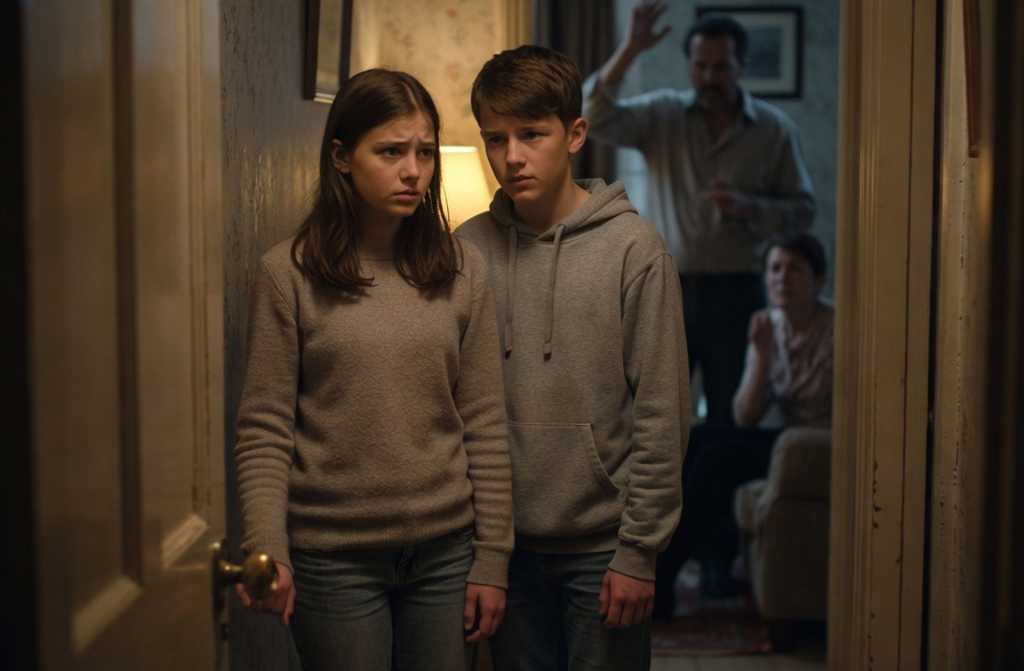
“What on earth is the matter with you this time? How much longer can we go on like this? I’ve had it up to here!” The woman’s voice carried from behind one of the doors in the block of flats, loud enough to reach every corner of the hallway.
At that exact moment, Emma and Oliver were trudging up the stairs. They halted as if they’d walked straight into a brick wall. Their eyes met for a split second, and that glance said everything. No words requiredthey both understood it was wiser to retreat. Letting out matching sighs, they spun around and slipped away from the building without a sound. Clearly, popping back into their own flat that evening was off the table.
Who on earth would fancy spending the night listening to their parents trade barbs nonstop? Not these two, that was for certain. The pair strode off toward the next block where their gran, Margaret, lived. Her place had turned into their regular bolt-hole lately. What started as weekend visits had become near-nightly retreats.
Things at home had gone from tense to downright ridiculous. Their parents acted as if the rest of the world had vanished, trading shouts like it was their full-time hobby. The worst part was how often they tried pulling the kids into the middle of it.
Mum would whip around to Emma and insist, “You tell him I’m right, won’t you?”
Dad would jump in before anyone could answer, turning to Oliver with, “No, she’s got it all wrongback me up here!”
Emma and Oliver kept their mouths shut. Neither fancied choosing sides or getting dragged into the endless back-and-forth. All they craved was a bit of quiet and warmth, the sort they always found at Gran’s.
These performances repeated like clockwork, day after day, with no one brave enough to hit pause. The kids had mastered spotting the early clues: a shift in tone, a sudden stiff movement, the way their parents sized each other up. Those were the red flags that it was time to clear out. Hardly anyone would relish living on edge, where a casual chat could flip into a shouting match without warning.
The siblings couldn’t pin down what had lit the fuse on this whole mess. Their family had never been the sort you see in glossy adverts, but Mum and Dad used to patch things up. Rows popped up now and then, naturally, yet they wrapped up with sensible chats over tea. Mum might pull a face, Dad might get a touch louder, but before long they’d be back at the table, sipping and plotting weekend plans.
Then, roughly two years back, something shifted. It was as though someone had quietly swapped the old versions for these new ones who could manufacture a fight out of thin air. A mug left on the table? Instant sermon on sloppiness and bad manners. A shirt on the wrong hanger? Fresh ammunition for digs about keeping order. A spoon abandoned in the sink? Treated like a minor scandal needing a full inquiry.
One evening, Emma sat at Gran’s kitchen table, stirring her tea without much thought. She watched the swirls for a while before blurting out with a trace of frustration, “How did it come to this, Gran? It all went wrong after their holiday together. What actually happened?”
Margaret paused, set her cup down, and gave Emma’s hand a gentle pat. She had her own quiet guesses about the rift, and they brought her no joy either.
“The grown-ups will sort themselves out,” she answered softly, aiming for a steady tone. “Folks sometimes need a while to decide what’s best.”
Emma nodded, though her expression made it plain she wasn’t fully convinced. She sensed Gran was keeping something back, but she let it drop. No point pushingwhile they were still seen as the youngsters, the real details stayed off-limits.
“We can’t take the yelling anymore!” Oliver burst out. “We can’t even get homework done or read without interruptions. I don’t remember the last time we sat down as a family. If being together is this hard for them, they should just splitit’d spare everyone the grief!”
The words tumbled out, carrying the weight of recent months. Oliver spoke for them both; he knew his sister felt the same. Silence had vanished from their flat long ago. Mum would snap, Dad would snap back, and suddenly another row filled every corner with no escape in sight.
“Oliver…” Gran sounded thrown. She set aside her knitting, studied her grandson, and shook her head slowly. “Have you considered what happens if they divorce? You’d likely be split up. Are you prepared to live apart from Emma?”
“We’ll move in with you!” Emma said at once, eyes pleading. “We’re already here most of the time anyway. You wouldn’t mind, right?”
Margaret went still. She grasped how worn out the pair felt, how the constant clashes had drained them. On one side, they’d be secure here in a steady, welcoming spot where homework happened without background noise and they could simply feel looked after. She adored them and was ready to provide that.
On the other, what about their parents? How to explain the kids no longer wanted to stay home? Would they even agree? And if they did, what would that do to their bond with the children? Might it end up driving a permanent wedge?
“Let’s not decide anything in a rush,” Margaret said after a long breath. “You know I’m always glad to have you. But let’s try speaking with your mum and dad first. Perhaps we can find a way to mend things together.”
“Don’t worry, we’ll handle the chat ourselves,” Emma replied with a bright smile. Gran seemed nearly persuaded, which mattered most. “Just don’t turn us down, please! We honestly can’t manage there anymore. It’ll be easier for them apartotherwise they might truly hurt each other one day. I saw Dad raise his hand toward Mum yesterday… He didn’t strike her, truly! But it was close.”
Emma quieted, replaying that moment. She’d nipped into the kitchen for water and stopped short: Dad half-facing Mum, arm jerking upward while Mum flinched down. He dropped it a heartbeat later, yet that heartbeat had stretched out forever for Emma.
“Gran, please agree!” Oliver backed her up. He stepped nearer, clasping Gran’s hand as though she might still refuse. “We’ll pitch in with all the household chores. Just don’t send us back. They hardly notice we’re there! Yesterday I mentioned parents’ evening to Dad. Know what he said? ‘Ask your mum!’ So I did. Can you guess Mum’s answer?”
“Ask your dad?” Margaret ventured quietly, already certain.
“Spot on!” Oliver gave a wry laugh. “Then they spent two hours debating who should attend. Sat in separate rooms and bellowed across the corridor while I stood there listening.”
“I asked them to sign a form for a museum trip,” Emma added, eyes lowered as she twisted her sleeve. “Now I’m the only one in class who can’t go. Neither signed it. Instead they launched into another rowMum insisted it was Dad’s responsibility, and Dad claimed Mum should deal with school matters.”
Margaret watched the pair and saw the deep tiredness in their faces. It wasn’t ordinary fatigue but the kind that piles up month after month, swapping family comfort for constant friction and support for indifference.
“It’s always this way,” Oliver muttered, shoulders drooping. His voice carried the weariness of someone repeating an old complaint. “Any request from us sparks a fresh argument. We barely want to come home. A few nights ago we got in at eleven and did they scold us? Not a bitthey sent us straight to bed without asking where we’d been. Then they spent ages accusing each other of poor parenting.”
The teenagers let out another shared sigh. Lately they’d been weighing whether their parents’ divorce might be the sole exit. Yet the thought of being separated terrified them, since that would surely follow. One would end up with Mum, one with Dad, turning their tight bond into rare weekend get-togethers.
They’d mulled options in hushed talks at night in their room. Once, Oliver jokingly floated the idea of running offjust packing bags and heading anywhere. He said it lightly to ease the mood, but Emma took it seriously. Her eyes brightened briefly before she murmured, “What if we really did leave? Even just for a couple of days…” Right then they both saw how bad things had grown that even running away felt oddly reasonable.
Then the idea struck: Gran! Why not ask to live with her? It came to them together. Emma spoke first: “Let’s ask Gran if we can stay with her. She won’t shout or argue. We won’t have to listen to all that bickering…” Oliver added quickly: “Yes! She’s kind and always on our side. Plus her flat has plenty of room.”
They began picturing a fresh startquiet mornings, homework without interruptions, evenings with board games and Gran. No raised voices, no blame, no hiding away to dodge the fallout. Hope stirred in them for the first time in ages. Let the parents untangle their own knots; the kids would finally get some peace. That was the vision Emma and Oliver held as they imagined life at Gran’s…
“Mum, Dad, we need to talk properly,” the twins said steadily, facing their parents. They’d waited for an evening when both were in and walked straight into the living room. Emma gripped Oliver’s handit helped her hold steady. “But promise you’ll listen all the way through before you jump in.”
David glanced up from his phone, startled. Sarah, busy with things on the sofa, straightened abruptly. Their expressions suggested the children had just proposed something outrageous.
“This is all your influence!” she huffed, folding her arms. “The kids are already laying down rules! As if we owe them explanations!”
“And look who’s talking!” David shot back, setting his phone aside. “I’m out working all hours to keep things afloat. You were here with them constantly! What exactly did you teach them that they’re now ordering us about?”
The twins shared a look. They’d braced for thisthe talk sliding into the usual blame dance. Still, they pressed on.
“Stop it!” Emma said, voice tight. She moved forward, forcing calm even as she trembled inside. “Oliver and I have talked, and we reckon you two should get divorced.”
The room went dead quiet. Sarah sat with her mouth half-open, while David rose slowly from the sofa.
“Well, that’s a fine development!” Mum’s tone turned sharp. “Emma, you’re far too young to lecture adults on how to manage their lives! And what else have you ‘decided’? Perhaps you’ll carve up the house while you’re at it?”
“If you don’t divorce, we’ll contact social services,” Oliver said, holding his sister’s hand tight. His voice stayed level, though he barely believed the words himself. “Then, Dad, your job could be at risk. Your firm doesn’t tolerate drama, does it? You’ve said yourself that reputation counts for everything.”
“And you, Mum,” Emma went on, meeting her mother’s eyes, “the neighbours will lose all respect for you. They won’t even speak to you! Everyone already knows how you two shout, and we’ll be happy to add the details!”
“They’re threatening us! Can you see this?” Sarah exclaimed, looking from one child to the other. “These are our own children! How could you speak to us this way?”
“We’re not threatening,” Oliver replied quietly but firmly. “We simply want you to see that this can’t continue. We’re worn out! Tired of the rows, of being ignored, of every little request turning into a battle.”
“You’ll divorce, live apart, and we’ll stay with Gran,” the twins finished together, as though they’d practised. “It’ll suit everyonecalm for us, fewer clashes for you. We refuse to stay stuck between you any longer.”
The parents stayed frozen. For once they had no ready reply. Normally they’d dive straight into arguing and finger-pointing, but now both seemed lost for words.
Their thirteen-year-olds were behaving in a way no one expected. Emma and Oliver stood close, hands linked, facing their parents with quiet resolve instead of the usual hesitation. And they were discussing matters the adults themselves had dodged.
The couple had considered divorce themselves more than once. What always stopped them was the same worrywho would the children live with? Separating the twins felt impossible; they were inseparable, always side by side and looking out for each other. The parents couldn’t picture splitting them across different homes, limited to weekend visits.
The idea of Gran hadn’t crossed their minds before. It simply hadn’t occurredperhaps because they were too caught up in their own complaints. But hearing the children’s suggestion, David and Sarah found themselves wondering if this might actually work. Gran adored the kids, had a roomy flat, and welcomed them anytime… Maybe this could ease at least part of the strain?
“I’ll ring Mum,” David said at last through clenched teeth. His voice sounded strained. “If she agrees…”
He didn’t finish. Sarah cut in, and the exhaustion in her words surprised even her:
“Then we can stop making each other miserable. Go ahead and call. I’ll be relieved not to see your face every single day.”
The words lingered. She hadn’t planned to sound so blunt, but years of stored-up hurt had pushed them out.
“And I’ll be over the moon!” David answered, trying to cover the sting with a dry edge.
No real anger coloured his tonejust a weary smile at how their home life had unravelled. He pulled out his phone and dialled his mother’s number slowly. While it rang, both parents stared in opposite directions, avoiding eye contact. They didn’t know what would come next, but sensed something irreversible might be happening…
That day the Parker family reached a turning point. It began with a long conversation between David and his mother. Margaret listened without interrupting, only asking the occasional question.
Once David had laid everything out, a quiet stretch followed. Gran drew a breath and said:
“If you both believe this is best for the children, then I agree. They’ll be looked after here.”
By evening the couple sat in the kitchenthe first time in ages without raised voices or accusations. They faced each other and went through the practicalities. Bit by bit they settled on the same conclusion: divorce was the sensible step. The children would move to Gran’s, and the parents would send her money each month toward their care.
Neither planned to walk away from the kids. Both Mum and Dad promised to visit on weekends, but on different days to keep their own contact minimal.
“I’ll collect them Saturday mornings for an outing, and you can have Sundays,” David said wearily. His soon-to-be ex-wife nodded. “That keeps things straightforward. The key is the children not feeling abandoned.”
Their shared aim was to limit contact and head off fresh arguments. They agreed not to discuss one another around the kids, not to compete for their loyalty, and not to air grievances in front of them.
“We’re still their parents,” David noted. “That doesn’t change just because we’re no longer married.”
Time proved the choice worked well. The kids could finally unwind and live like regular teenagers. Emma joined an art groupshe’d wanted to for ages but the constant worry had always got in the way. Oliver took up football and made new mates on the team. They started doing things together again: wandering the city, catching films, chatting about school without the dread of an argument erupting.
Their schoolwork steadied too. They now had a calm space for studying, free from background noise. Homework got finished without fuss, and the improvement showed in their marks. Teachers commented on the difference: “You’ve both become far more focusedwell done!”
Life gradually settled into a steadier patternnot flawless, but reliable and free of sudden storms. The children no longer retreated to their room or flinched at loud voices. They simply got on with things, the way teenagers should when they’ve found a bit of solid ground in difficult times…
Five years on, life for the Parkers moved along at an even pace. Emma and Oliver had settled into the routine: lectures, clubs, time with friends, and easy evenings with Gran. Their parents still came on alternate days, each bringing small gifts and attention but no old resentments. Over time they’d learned to keep things polite and straightforward.
The first real meeting between the former couple took place at the twins’ graduation. The school held a formal event, and both parents attended. They kept their distance at first, sitting apart, but the awkwardness eased as the evening went on.
During the dancing, David walked over to Sarah unexpectedly:
“Fancy a dance? For old times’ sake.”
She paused, then nodded.
Afterwards they sat in the school grounds for ages, watching the new graduates laughing by the fountain. Talk flowed naturallyfirst about the children, then memories of earlier years.
They chatted comfortably, recalling the better parts of their marriage and staying civil throughout. They focused on what had once been good rather than old hurts. The twins, observing from across the way, felt quietly pleased. Still, seeing their closest relatives treat each other like strangers had its sting.
Then something entirely unexpected happened. The very next day David and Sarah asked the kids to meet at a café. Over tea they glanced at each other, joined hands, and David announced with a wide smile:
“Kids, your mum and I have decided to marry again. We’ve realised over these years that our feelings are still there. We still care for each other and want to try being a family once more.”
He sounded genuinely cheerful, as if sharing the best possible news. Sarah smiled broadly, clearly hoping for an excited response.
The twins looked at one anothertheir expressions clouded at once. Doubt showed in Emma’s eyes, and Oliver’s hands tightened under the table. Here we go again! What were they thinking? Could they truly share a home without the old troubles returning?
“You’re serious?” Emma managed.
“Completely,” David answered. “We’ve both changed. We’ve learned to listen. We want to give this another go.”
The children stayed quiet. Mixed feelings churned inside them: part of them hoped the parents really had shifted, while another part feared the same pain repeating.
Yet they didn’t argue against it. They offered no comment at all, which clearly disappointed their parents. Sarah looked at them, puzzled:
“Aren’t you pleased? We thought you’d be happy for us.”
The twins simply exchanged a glance and lifted their shoulders. What could they say? “Don’t do thisyou’ll only make things worse”? The words wouldn’t come. They didn’t want to seem unkind, but pretending delight felt impossible too.
The rest of the visit dragged. The parents outlined their plans while the kids nodded politely, minds elsewhere. On the way home Emma said quietly to her brother:
“I hope they know what they’re doing.”
Oliver just let out a breath…
“So, London it is?” Emma opened her laptop and started scrolling through university pages. “Far enough from all this chaos. I can already guess how this latest act will play out!”
“We’re going,” Oliver replied firmly, sounding older than his years. He pushed a hand through his hair as if shedding the weight of recent months. “They’ll manage a month, perhaps two. Then it’ll be back to the usual: raised voices, doors slamming, endless accusations… I don’t want to remain caught in the middle of their relationship. I don’t want to wake each morning wondering what mood they’ll be in or which of us will catch the next round of complaints.”
He got up and paced, gathering stray books without thinking. The same question circled his mind: why do adults, meant to show sense and steadiness, behave like temperamental teenagers? Why keep repeating the same mistakes instead of fixing what’s broken?
“We have to get away,” he repeated, pausing by the window. Dusk was settling outside, tinting the city in gentle orange light. Oliver stared out, as though trying to spot his own future in the distance. “Somewhere distant. Far enough that their arguments can’t reach us. Let them handle it alone. We’re not their counsellors, not their go-betweens, not their punching bags. We have our own lives and plans, and I won’t let another cycle of family drama wreck them.”
“When do we send the applications?” Emma asked evenly.
“Tomorrow,” Oliver answered without pause. “So we don’t have time to second-guess.”
She nodded, eyes still on the screen. Pages for London universities flashed pastshe’d spent days reviewing courses, student accommodation, and career options after graduation. Her notebook beside the laptop held growing lists of pros and cons, paperwork needed, deadlines, and contact details.
“The main thing is studying without their dramas pulling focus,” she said softly. “It’s good we’ll be so far away.”
“Precisely,” Oliver agreed, settling beside her. He leaned in to read the screen. “When they start another round of blaming each other, we won’t even know. Let them ring and complain or try pulling us into a family discussionwe’re staying out. And that whole ‘second chance’ idea,” he added with a dry chuckle, “is theirs to deal with, not ours.”
Sarah and David went ahead with the second wedding. This time they skipped anything elaborate: no big expense, no fuss, and honestly no desire for a spectacle. They kept it to a straightforward registry office ceremony and a small meal with close family and a few friends.
In the photos they looked genuinely contentsmiling, holding hands, exchanging warm looks. The images captured linked fingers and gentle expressions. It seemed past hurts had been set aside, that time apart had helped, and that they now knew what they wanted with only good things ahead. The twins, studying the pictures, couldn’t help wondering if this time might truly be different.
But no. The first weeks after the wedding stayed surprisingly calm. The couple made an effort to be kinder, thanked each other more, and let small things pass. Old patterns crept back, though. Within a month the flat echoed with sharper tones again. At first they were mild jabsquiet yet pointed: “Did you leave that out again?”, “Why didn’t you say you’d be late?”, “You could lend a hand since you’re here.”
Open clashes followed soon after. Rows flared over nothing much: damp towels left in the bathroom, forgotten bread, the television left too loud. Words grew harder, voices rose, and the gaps between arguments shrank.
Two months in, just as Oliver had foreseen, things boiled over. One evening a squabble about who should shop turned into a proper storm. David, losing patience, flung a mug at the wallit shattered loudly, pieces scattering across the kitchen floor. Sarah, just as furious, seized a plate and smashed it down. The sound of breaking crockery rang through the flat.
After such episodes the parents always tried ringing the children. Each call began the same: one of them would dial while still breathless from the row and immediately pour out every grievance.
“Can you imagine what he said today?” Sarah would cry when Emma picked up. “He won’t even try to see my side!”
“Son, you must understandshe has no self-control,” David would tell Oliver in an agitated rush. “I’m doing my best, but she seems to hunt for reasons!”
Emma and Oliver had learned to cut these calls short with polite firmness. They no longer let themselves be pulled into long debates or attempts to assign blame. Their replies stayed brief and steady.
“Mum, I’m in a lectureI’ll ring later,” Emma would say calmly, glancing at the clock with twenty minutes still to spare before class. She simply didn’t want another monologue.
“Dad, I’ve urgent worklet’s talk at the weekend,” Oliver would answer, eyes on his screen. He knew letting the parent vent would stretch the call for an hour, followed by more soothing.
“Later” and “at the weekend” always got delayed. The twins found excusesstudies, part-time jobs, time with friendsand the calls grew rarer. They felt no guilt; they were simply guarding their own peace and time, aware they couldn’t fix what went on between their parents.
The twins had built lives of their ownbusy, purposeful, and well away from family dramas. Their days now revolved around their own interests and plans rather than bracing for the next row.
Emma threw herself into psychology. She enjoyed learning how minds worked, why people behaved as they did, and how to support those facing hard times. In her third year she began volunteering at a centre for teenagers from difficult homes. There she ran group sessions, helped young people voice their feelings and find ways forward. She recognised pieces of her own past in them and tried to offer the attention and support she’d once missed.
Oliver had discovered a passion for IT. From early on he was drawn to programmingthe clean logic of code, the satisfaction of building systems that actually worked, and tackling tricky technical puzzles. He spent hours at the computer, picked up new languages, and joined student competitions. In his fourth year his team placed third in a regional mobile app contest, which gave him confidence and confirmed he was heading the right way. He took a part-time role at a small IT firm and quickly showed himself as reliable. Working on real projects taught him how to collaborate, manage his time, and handle unexpected situations.
The twins began shaping plans for the future without factoring in parental rows. Emma hoped to start her own practice one day, helping families communicate better. Oliver considered launching his own venture. They talked ideas over tea in cafés, sketched outlines, and jotted notes. In those moments they felt steady: they had direction and a life that was finally their own.
When Sarah and David tried again to draw them inphoning in tears to describe how awful things were and how they couldn’t understand each otherthe twins answered calmly and directly. They’d already decided how to handle it without slipping back into old roles.
“That’s enough, you twosort it between yourselves,” Emma said firmly. “You have your life; we have ours.”
“But you’re our children!” Sarah wept. “You ought to stand by us!”
“If you acted like adults instead of squabbling children, we would,” Oliver replied at once. “You chose to remarry and you’re still making each other miserable. You can’t share space without fighting, so stop forcing it. Just divorce properly and live apart.”
The words might have sounded tough, but the brother and sister only wanted a bit of peace.